Explainer Video Production: Everything You Need to Know in 2025
Have you ever bought something after watching an explainer video?
Perhaps a video like this;
Or like this;
These videos are surprisingly effective when they come to marketing a business. They’re still an ad, technically, but they’re far more valuable to people. They aren’t try to shock you, invoke an intense emotion, or push creative boundaries to stand out.
Explainer videos are pure informative value that cut to the chase and tell customers what they need to know about a business they’re potentially interested in. That’s why 73% of people bought a product or service after watching an explainer video about it.
Not "considered buying." Not "added to cart and abandoned." Actually bought.
Explainer videos aren't just content—they're conversion machines.
They boost landing page conversions by up to 80%, generate 12 times more social shares than text and images combined, and help companies grow revenue 49% faster than those who skip video entirely.
Whether you're launching a new product, simplifying a complex service, or just trying to stop people from bouncing off your website in five seconds, explainer video production is one of the smartest investments you can make.
Let's break down exactly what it takes to create videos that actually work.
What is Explainer Video Production?
Explainer video production is the process of creating short, focused videos—typically 60 to 120 seconds—that clearly communicate what your product or service does, why it matters, and what action viewers should take next.
These aren't your generic corporate promos.
They're strategic storytelling tools designed to cut through the noise, grab attention fast, and make complex ideas instantly digestible.
Think Dropbox's iconic animated video that explained cloud storage to millions of people who'd never heard of the concept—watched over 25 million times and estimated to have generated over $48 million in revenue - all from a $50,000 initial investment in video production.
Why they actually work: It comes down to psychology. The human brain processes visual and verbal information simultaneously through what's called dual coding theory. When you combine compelling visuals with clear narration—exactly what explainer videos do—people retain over 50% more information than they would from text alone.
Real results speak louder than theory.
Companies using explainer videos see an 87% direct increase in sales. Websites with video enjoy 4.8% conversion rates compared to just 2.9% without.
And 96% of consumers have watched an explainer video to learn about a product—which means if you don't have one, you're invisible to most of your potential audience.
What are the Different Types of Explainer Videos?
Not all explainer videos are created equal. The style you choose depends on your message, audience, budget, and what you're actually selling. Here's what works and when to use it.
2D Animation (The Industry Standard)
2D animation is the Swiss Army knife of explainer videos. It uses illustrated characters, graphics, and motion design to tell your story in a flat, two-dimensional space. This is the style you've seen everywhere—and there's a good reason for that.
Best for: SaaS products, services, abstract concepts, anything that's difficult to film or doesn't physically exist yet. If you're selling software, a platform, or a process, this is your go-to.
Why it works: Total creative freedom. Want to show data flowing through the cloud? A customer's journey from problem to solution? The inner workings of your AI algorithm? Animation makes the invisible visible and the complicated simple.
Cost range: £1,500 to £7,000 for most projects. It's the sweet spot between professional quality and reasonable investment.
When to use it: Tech companies, B2B services, startups explaining new concepts, anyone who needs flexibility for future updates (animated assets are way easier to edit than re-shooting footage).
Live Action (The Trust Builder)
Live action explainer videos feature real people, real locations, and real products. No animation, no illustration—just humans doing what humans do best: connecting with other humans.
Best for: Tangible products, building trust and credibility, professional services, customer testimonials, anything where showing the real thing adds value. If you can hold it, wear it, drive it, or eat it, live action makes sense.
Why it works: Emotional connection. There's something about seeing a real person's facial expressions, body language, and genuine reactions that animation just can't replicate. It builds trust faster, which is crucial if you're new to the market or selling high-ticket services.
Cost range: £3,000 to £20,000+ depending on complexity. You're paying for actors, locations, equipment, crew, and all the logistical headaches that come with actual production days.
When to use it: Physical products that need to be demonstrated, people-oriented businesses (consulting, coaching, restaurants), brand stories where authenticity matters more than polish.
Whiteboard Animation (The Educator)
Whiteboard animation simulates the experience of watching someone draw on a whiteboard in real-time. It's simple, it's engaging, and it keeps viewers locked in as the story literally unfolds in front of them.
Best for: Educational content, step-by-step explanations, training materials, anything information-heavy that needs to feel approachable. Great for internal communications and onboarding too.
Why it works: The drawing-in-real-time effect is hypnotic. Our brains are wired to pay attention when something is being created before our eyes. Plus, it strips away all the visual noise and forces focus on the message itself.
Cost range: £500 to £2,000—the most budget-friendly professional option available.
When to use it: Tight budgets, educational institutions, non-profits, anyone who needs evergreen content that won't look dated in three years.
Motion Graphics (The Data Visualizer)
Motion graphics bring abstract shapes, icons, text, and data to life through movement. No characters, no story necessarily—just dynamic visual communication that makes information pop.
Best for: Explaining systems and processes, visualizing data and statistics, corporate communications, tech and finance sectors where clarity trumps personality.
Why it works: When you're dealing with numbers, workflows, or technical concepts, motion graphics cut straight to the point. They're clean, professional, and perfect for audiences who want information fast without the narrative fluff.
Cost range: Similar to 2D animation—£1,500 to £7,000+, depending on complexity.
When to use it: B2B marketing, investor presentations, explaining technical infrastructure, anywhere you need to look polished and professional without being too playful.
Hybrid/Mixed Media (The Best of Both)
Hybrid videos combine live action with animation—think a real person talking to camera with animated graphics, text, and illustrations layered over the footage. It's having your cake and eating it too.
Best for: Complex products that need both human connection and visual explanation, companies that want to showcase their team while simplifying their offering, anything that benefits from flexibility.
Why it works: You get the authenticity and trust of live action with the creative freedom and clarity of animation. It's particularly powerful for tech companies that want to humanize their brand while still explaining complicated features.
Cost range: Varies wildly—£5,000 to £15,000+ depending on how much of each element you're using.
When to use it: When neither pure animation nor pure live action quite cuts it. Medical companies explaining procedures, fintech showing both the team and the technology, any scenario where you need maximum impact.
The Explainer Video Production Process
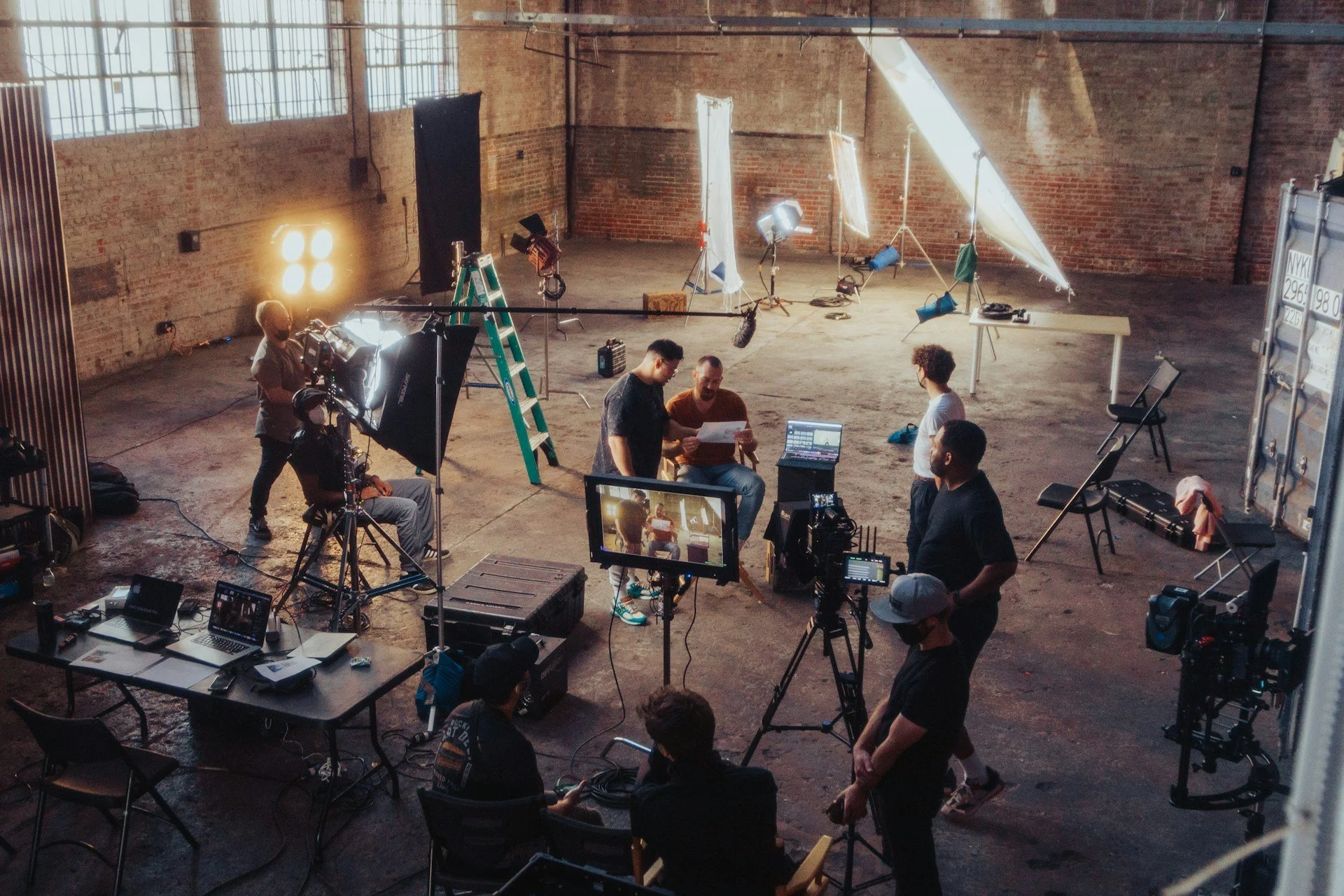
Creating a killer explainer video isn't about just hitting record or opening up After Effects. It's a strategic process that takes your business goals and turns them into content that actually drives results.
Strategy & Concept: Before a single frame gets created, you need to nail down your message. What's the one thing you want viewers to remember? What action should they take? Who are you talking to and what keeps them up at night? This foundation work is what separates videos that convert from videos that just look pretty.
Scriptwriting: Your script is everything. In 60 to 90 seconds, you need to hook attention, identify the problem, present your solution, prove it works, and drive action. That's roughly 150 to 225 words total. Every single one has to earn its place.
Storyboarding: This is where your script becomes visual. Storyboards map out each scene, showing what viewers will see while they hear your voiceover. It's your chance to catch problems before they become expensive mistakes in production.
Voiceover: The right voice can make or break your video. Professional voiceover artists don't just read words—they bring personality, pacing, and emotion that keeps viewers engaged. Accent, tone, gender, energy level—it all matters.
Production (Animation or Filming): This is where the magic happens. For animation, artists create assets, animate scenes, and build out your video frame by frame. For live action, crews film on location with actors, lights, and all the technical wizardry that makes footage look cinematic. Either way, this is the most time-intensive phase.
Post-Production: Editing, sound design, music, color grading, final touches. This is where good videos become great. It's also where you'll typically go through revision rounds to make sure everything aligns with your vision.
Timeline expectations: For animated explainer videos, budget 4 to 6 weeks from concept to final delivery. Rush jobs are possible but usually compromise quality. Live action can be shot in a matter of days, but pre-production planning and post-production editing mean total turnaround is still measured in weeks, not days.
How Much Does Explainer Video Production Cost?
Let's talk money. Explainer video production pricing varies wildly based on style, length, complexity, and who's making it. Here's what you're actually looking at:
Whiteboard Animation: £500 to £2,000. Entry-level professional quality. Great for tight budgets but limited in creative flexibility.
2D Animation: £1,500 to £7,000. The industry standard. Professional, versatile, and cost-effective for most businesses.
3D Animation: £7,000 to £25,000+. Premium option for products that need that extra visual wow factor. Think architectural renders, medical devices, complex machinery.
Live Action: £3,000 to £20,000+. Huge range depending on whether you're filming a simple talking head or a full production with actors, locations, and crew.
What affects pricing?
Length (every second costs money), complexity (custom illustrations vs. stock assets), revisions (endless changes add up), voiceover talent (professional vs. celebrity), and speed (rush fees are real).
Here's the ROI perspective: An £8,000 explainer video that increases your landing page conversions by even 20% will pay for itself faster than almost any other marketing investment. When you're looking at 80% conversion boosts and 87% increases in direct sales, suddenly that price tag looks less like an expense and more like a down payment on serious revenue growth.
Quality matters. A cheap, amateur explainer video does more harm than good—it makes your brand look cheap and amateur. Invest properly or don't bother.
Best Practices for High-Converting Explainer Videos
Making an explainer video is one thing. Making one that actually drives results is another. Here's what separates the winners from the noise.
Keep it ruthlessly short. The ideal length is 60 to 90 seconds. That's it. Every second past 90 sees viewer drop-off rates skyrocket. If you can't explain your value proposition in under two minutes, you don't understand it well enough yet.
Focus on benefits, not features. Nobody cares that your software has "advanced machine learning algorithms." They care that it saves them three hours a week and makes them look like a genius to their boss. Lead with the transformation, not the technical specs.
Hook them in the first 8 seconds. You have less time than a TikTok video to prove you're worth watching. Start with a problem they recognize, a surprising stat, or a bold statement. Lose them here and nothing else matters.
End with a crystal-clear call-to-action. "Visit our website" is weak. "Start your free trial today" is better. "See how [specific outcome] in under 5 minutes—no credit card required" is best. Be specific about what happens next and why they should do it now.
Invest in professional production quality. Shaky footage, bad audio, amateur animation—these things scream "don't trust us with your money." Your explainer video is often the first impression people get of your brand. Make it count.
Strategic placement wins the game. Put your video on your homepage above the fold. Embed it in landing pages for paid campaigns. Include it in email marketing (the word "video" in a subject line increases open rates by 19%). Share it on social media. Test it in paid ads. One great video can work across a dozen channels.
Videos That Actually Convert
Explainer video production isn't about making pretty content—it's about creating conversion machines that turn curious browsers into paying customers. The stats don't lie: 80% boost in landing page conversions, 73% purchase rate after viewing, companies growing 49% faster. This is marketing that actually moves the needle.
At Freitas Films, we don't do corporate clichés or forgettable fluff.
We create bold, cinematic explainer videos with personality—the kind that make people stop scrolling, pay attention, and take action.
Whether you need 2D animation, live action, or something hybrid that breaks the mould entirely, we bring 10+ years of production experience to every frame.
Ready to turn your message into a conversion machine?
Let's talk and make something that actually works.